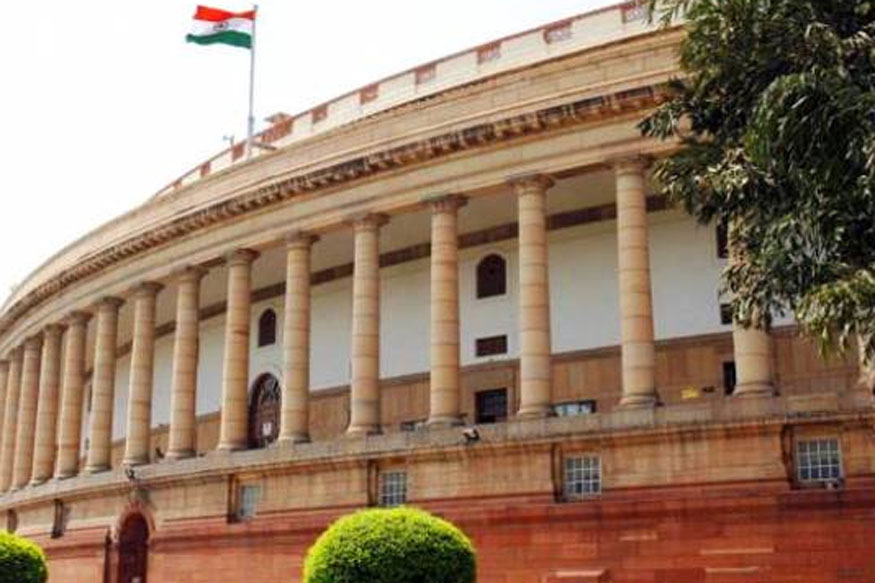
GS 2 Polity Topics
- GS 2 Polity covers a wide breadth of topics from Preamble, FR, FD to Parliament, Executive, Judiciary.
- It seems like a complex maze, however the way to approach it is by relying on PYQs and focussing on the most burning current issues.
- I listed down all the PYQ themes and made sure I had notes on them. You can do the same.
- Further, I practised writing answers to the PYQs and test questions focussing on value additions. For eg, in an answer on Vice President, I would begin by quoting both the constitutional article as well as what Dr Ambedkar had to say about the post.
- For Introductions: can use Constitutional articles, or quotes of Gandhi/ Ambedkar/ other Constituent Assembly members/ etc.
- Substantiate points with examples, and judgments, make use of popular reports
Notes:
Salient features of the Representation of People’s Act.
- Didn’t bother much, had a basic understanding + referred to Shankar IAS’s model answer snipped in my note
Constitutional, Statutory, Regulatory, and Quasi-Judicial bodies
- Basic understanding already exists due to Prelims prep, but that is not enough.
- So, analysis needs to be added from the newspaper.
- This overlapped with my PSIR optional so I used the same notes for both, just wrote the GS ones in point format.
Government policies and interventions for development in various sectors and issues arising out of
their design and implementation.
- Keep an eye on policies and schemes rolled out in the past year or been in news repeatedly.
- Short and simple notes about objectives, pros-cons, and way forward can be made.
Development processes and the development industry- the role of NGOs, SHGs, various groups and associations, donors, charities, institutional and other stakeholders
- For this part, I focused mainly on NGOs and SHGs, their role, issues, way forward, and issues around FCRA.
- Simple data, for eg: 33 lakh NGOs in India as per the CBI 2017 report, or that there are 70 lakh SHGs in India, 90% of which are women (NABARD Data) can embellish your answers.
- There must also be examples of NGOs and SHGs, like Jeevika SHG-Bihar, Kudumbashree-Kerala/ NGOs- Pratham, CRY, Helpage India, PUCL, ADR, etc.
- I would always begin my SHG answer with a definition of NABARD.
- For NGOs, I would quote WORLD BANK “Working with NGOs Report” 1999 in the Introduction, to define it.
- Conclusions must have concrete solutions, for eg: better working of NITI’ss NGO DARPAN, Publishing DONOR REPORTS in line of WHO; for SHGs- Social Stock Exchange must be expedited, 2nd ARC recommendation of SHG monitoring cell in each state, improved market access for SHG products and so on.
Vulnerable Sections
- Use: Data, reports, judgments, public scholars, international conventions, best practices
- The structure of every note must have
- key data: for eg 8.6% tribal population in India (Census 2011)
- Major policy points: for eg salient features of the National Policy for Persons with Disabilities
- Key challenges faced by the Vulnerable Section
- Solutions in terms of government policy, schemes, civil society efforts, best practices
- Conclusion: must have International Conventions related to the vulnerable section— for eg- Yogyakarta Principles for Transgender; Madrid International Plan of Action on Ageing for Older Persons
- Vulnerable Sections to be covered– women, transgender, tribes, migrants, older persons, children, minorities, differently abled, manual scavengers (especially focus on any section in news)
- Source: Self, Dipin Sir’s CA, Santosh Sir (Level UP), Drishti IAS
Issues relating to development and management of Social Sector/Services relating to Health, Education, Human Resources.
- Basic data must be rattofied for these topics
- Salient features of key policies- National Health Policy, NEP- critical analysis of them
- Overall challenges and diverse solutions for the same
- Pick up points from the newspaper to enrich the answers
- I also used key judgments and SDGs for them since its a part of the GS 2 paper
- For eg: HEALTH:
- “It is now settled law that right to health is integral to right to life.”– State of Punjab vs Mohinder Singh Chawla;
- SDG 3 for health
- Education
- The right to education flows directly from the right to life- Mohini Jain vs the State of Karnataka
- SDG 4
- Incheon Declaration
- Qingdao Declaration
- For eg: HEALTH:
- Notes made mainly from Dipin Sir’s notes by summarising it + value addition + enrichment from newspapers
Issues relating to poverty and hunger
- Use: data, reports, example, public scholars- especially Amartya Sen, Jean Dreze, Abhijit Banerjee & Esther Duflo, can quote their books; best practices
- Reference: Dipin Sir’s notes, Drishti IAS notes for Feminisation of Poverty; Poverty estimates note is basically an answer I wrote for Shankar IAS when I worked in their content team in 2020.
Governance, Transparency & Accountability, E-Governance, Citizen Charter etc
- Overlaps with section of Ethics paper
- Current examples, new policies must be included
Role of civil services in a democracy.
- Here what is basically needed is an understanding of the role of Civil Servants in India’s Democracy and the basic problems around it + solutions.
- Can quote Sardar Vallabhai Patel– “steel frame”
- Ambedkar
International Relations
• Used my PSIR notes itself
- Source: Dipin Sir’s notes, Shubhra Ranjan Ma’am, Toppers–Utkarsh Dwivedi’s notes, Vikas Ruhela’s notes & google searches.
Link to Notes:
- Preamble: https://www.evernote.com/shard/s456/sh/08a5dabf-e590-a1cb-8647-8763790b4501/375QShhf64x1bSFCHe0uL6Gz_VNhL_8eOwmh8WA-MZ_cN-OEezMXOUiEXQ
- Fundamental Rights: https://www.evernote.com/shard/s456/sh/0ac4334e-716f-9a50-38ba-007abdfd0bf8/udY5jpcfhrTvVSaeMxu-pykDoZ7PBsg7mEIF7KIxzSjQBJA714Tuu1FmqA
- Writs: https://www.evernote.com/shard/s456/sh/96bc9789-5793-5047-bcc1-9446989d6bf7/VI6CpHwRlXDCfoluZ4218Ka08YtVfKSjf0Ve5xDbw99d5RgNnrSe7iaf6g
- Fundamental duties: https://www.evernote.com/shard/s456/sh/7a830a44-7651-03d2-0051-78a4a0aa3b76/K2EViqPLd56IRqOhYLzhEv0H7j8XRDgGb6QvbPEbp5Ji2GjRBANci8Snjg
- DPSP: https://www.evernote.com/shard/s456/sh/8e088581-057d-682f-4e7d-4bacb8e94ce4/z2BXbD5PwrjaMrvVnx-yKAn8K5ruf7buszPlweWBzdz-c9vFgmvSdWGpRQ
- Parliament: https://www.evernote.com/shard/s456/sh/e501a314-194c-79b3-e599-a0cd8dfbea3c/Eq21uhSpOhu79IPzq7SRnxb47w8I4sIVD9sQP8JR58BmdjN9J82l6zMFbQ
- Governor: https://www.evernote.com/shard/s456/sh/9c15d39e-3e48-daa9-5477-e7bafc2006ba/oi58KAU0deqgCHX70LP00__AiS8qhmj5XYQd2h04Urzft945_gdDNxx9EQ
- Lt. Gov: https://www.evernote.com/shard/s456/sh/75bf52da-b6f2-a8a9-9fe0-9c6c804610f5/NJk7g1c6gyph2b2hSwOXgU2xJzgAYFnvb3wU5OivROvcy9TL7o8K7MiE_A
- President: https://www.evernote.com/shard/s456/sh/cf1b1d21-56ed-135f-2eba-1836e9a9fc88/n7zIRJOchB0uYgISo_P3KODKv4dXjC18xL0bs_6WiE0hdyJSwY6Aql_tvQ
- Vice President: https://www.evernote.com/shard/s456/sh/bf9df646-5d54-7767-2cd9-a322995a41de/pL8GJbRYrjFy_oPrY7JW-fa2rbSxIx_NXToVvosfY1bk9KbTwr3UpnijBQ
- Judiciary: https://www.evernote.com/shard/s456/sh/40aa9c8e-7642-e5fa-6114-7931fa0223f1/P5ujZwodxS7mPYD5uhaIH6TAy6iY0MTRKX3RKxkTY8TrHqTpVbSc1L4s0w
- Fifth & Sixth Schedule: https://www.evernote.com/shard/s456/sh/6e716721-a26d-fd35-97f1-32be3489ab22/sRdHyeZTKsXQN2ZOvMqyN-xBJdiCMehd5shdhT-77an_IXczBMkUCRBhdw


 Preeti Kumari
Leave a comment